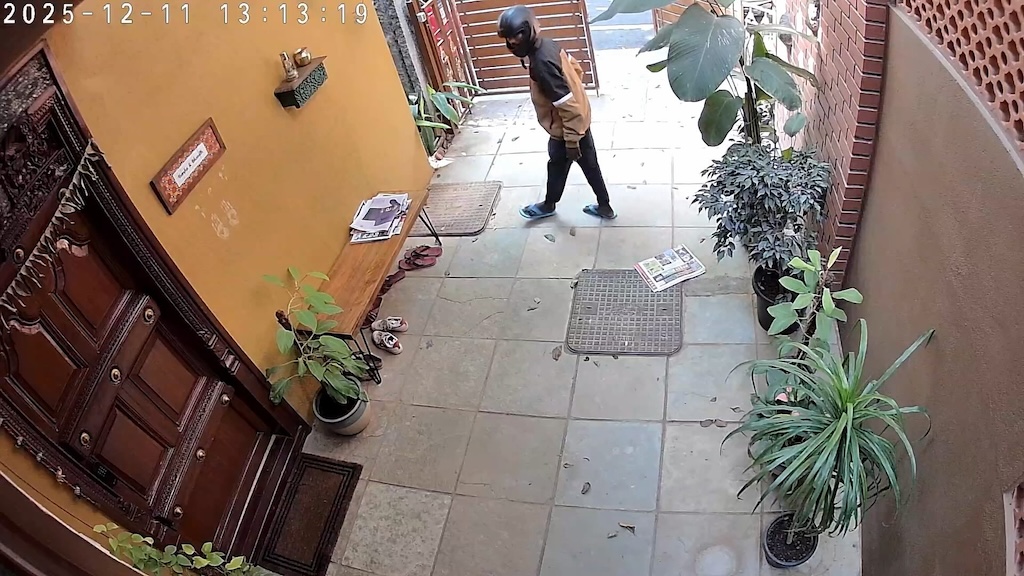
On a slow Thursday evening, I got a call from my neighbour. The metal manhole covers for the underground water tank in our car porch had gone missing. It was probably stolen, he added. I was out of town the entire week and an immediate sense of helpless dread set in.
I opened my security camera app to check the live feed. Yes, the covers were indeed gone. I then spent the next hour scanning through the recordings to piece together when, how, and why it could have happened.
Here is the video. It answered the when and the how. Only the why lingered.
The open tank was a big hazard. I called a nearby hardware shop owner, Yogesh, to get new covers. Yogesh enlightened me:
- Theft of metal manhole covers has become common in Bangalore over the last three years
- Manhole covers were stolen from Yogesh’s place too — not once, but twice
- Thieves sell them for scrap at around INR 500 per piece
- There is generally very little the police can do for such petty crimes
- It’s best to replace them with fibre covers, which have no resale value
The anguish faded. The world felt a little less unfair knowing others share your misfortune :)
But why would these thieves risk so much for a Rs.1000 payout?
If we zoom out, there are three layers of security:
- Security cameras capture video evidence.
- In case of an incident, owners present this evidence and file a police complaint.
- The police then act on the complaint, identify the perpetrators, and bring them to justice.
Yet, even with all three layers in place, the theft still happened. Why?
I suspect it’s because of the low monetary value of the theft. This breaks the 2nd and 3rd layer of security.
- In this case, I had already lost the intent to file an official complaint. I suspect 80% of owners do not bother filing complaints.
- Even if I did file a complaint, the police can dismiss the FIR for ’low-value theft’ involving articles worth less than INR 5,000. Let’s assume the police drop 80% of such complaints
- That means, effectively the police pursue only about 4% of cases (20% x 20%)
This changes the risk equation entirely. The real risk of getting caught materialises only once in 25 thefts. The thieves have reduced the chances of getting caught by successfully distributing the burden of reporting incidents across dozens of homeowners, and then subsequently tasking the police with low priority FIRs which are most likely to be dismissed.
Well played!
But this model has a blind spot.
Hypothetically, what if one of the 25 houses you decided to hit belonged to an international celebrity? A Grammy Award winner and Padma Shri awardee like Ricky Kej, for example? Well, that should spur the police to act and pursue the menial case with utmost priority.
Yes, that’s exactly what happened. The guy who stole from Ricky Kej has a similar build and the exact same jacket. I assume justice has been served.